
Writing an effective CV
CVs are an essential tool in your belt during the job search and application process – and regardless of whether you are a school-leaver looking for your first job, or a seasoned professional looking for the next step in your career development, everyone should understand what makes a good resume.
Your CV is usually the first point of contact that a potential employer will have with you, and so it is imperative that when writing your CV, it reflects your skills, experience and accomplishments in an easy-to-read and engaging format.
It is surprising to note just how many job seekers don’t recognise the difference between a good resume and a great resume – and this could be the deciding factor for you in securing an interview for your dream job.
Tips on the format of writing a great resume (CV)
- The length of your CV should be no more than 3-4 pages
- It is designed to provide an overview of your skills, experience and achievements.
- Always prioritise the points which most accurately match the requirements of the role you are applying for at the beginning/top of your resume, even if they are less important in terms of your current role. This way the hiring manager will be able to see what makes you a great candidate straight away without having to dig for the information.
- An effective CV should begin with a short summary of who you are. Make sure the CV is straight-forward and avoid all the subjective clichés such as ‘excellent self-starter’, ‘good team player’, ‘natural leader’ and ‘good communicator’. These qualities can be demonstrated through your tangible achievements which follow in the CV.
- Remember that your CV will form part of the script for the interviewer’s questions.
- Address time-gaps in your work history, and include clear and concise explanations for these.
- Your CV should also give some idea of your future potential. If you are presently studying for an additional qualification, say so.
Illustrate your greatest career achievements to date
When writing their resume, many job seekers make the mistake of simply listing the day to day responsibilities they have held in each role. It is vital to illustrate how well you have carried out this work through your list of achievements and select material to reflect the requirements of the specific post. Instead, it is vital that you can demonstrate to a prospective employer your accomplishments outside of these standard tasks.
How does an achievement differ from responsibility? An achievement is a statement of how you have added value to an organisation.
For example: instead of listing ‘researching and resolving accounts payable issues’, go one step further by explaining that as a direct result of your research, you were able to reduce the amount of un-paid invoices for the business by 50% and thus increase operating revenue.
Sell yourself: What makes you unique from other candidates?
- Always express your skills and qualities in the present tense – even if you have an accounting qualification that you are not using at the moment, this is still a relevant certification to list.
- Reinforce positive skills and qualities to make sure they jump off the page. Example: If one of your strong points is that you are a skilled communicator, enhance this point by giving an example of when you have demonstrated this ability.
- Make sure your content is clear and simple to read.
Effective CV’s are chronological
Pay attention to how your resume is ordered – your most recent experience should always be at the top of your resume so that hiring managers and recruitment consultants can easily gauge what you have been working on most recently.
In general, the best rules to follow are:
- Chronologically list experience in reverse date order, with your most recent role first
- Present your career history as a series of appointments with the day to day responsibilities listed, as well as achievement against each bullet point
- Allocate more space for your more recent positions, since these are where your most current experience and achievements is usually found
The do’s and don’ts of writing a good CV:
DO:
- List your professional and higher education qualifications
- Show recent vocational training
- Include genuine foreign language skills
- Add a note of any publications you have been featured in and/or external positions you hold
- Ask someone independent to look at your resume when you have completed it - not a friend or family member – so that you can get an unbiased opinion on its efficacy.
- Be prepared to refine your resume a number of times until it is right
- Where possible, update your CV for each new job application to match the specific requirements of each role you are applying for.
DON’T:
- List every training course you have ever attended
- Indicate race, nationality, marital status, children, religion or political preferences
- Indicate your computer skills
- Include your present salary details
- Give references
Another element of an effective CV is the cover letter.
7 reasons no one will read your resume
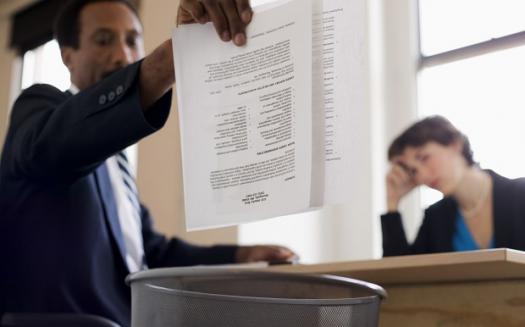
Job-hunting is never easy, especially when you’re on the prowl and nobody is taking the bait. You’ve worked hard on getting your resume just how you like it, so how come nobody wants to read it? After all, you know you can do the job.
The truth of the matter is that with any job, you and your resume are competing with many other applicants and many other resumes. If your resume does not immediately sing to a recruiter, it will likely become just one more unread document on top of a never-ending pile on a recruiter’s desk.
Swallow your pride. Your resume is not doing a good job at selling ‘you’, and here are seven reasons why.
1. Too long
Time is crucial to all of us, including recruiters and potential employers. When compiling your resume, make sure it’s not too long. If the first impression your resume gives is that it rambles, you’re already off to a bad start. Keep it short and sweet. Seek out some resume writing tips and, once written, go back and edit it. If you’re asked for an interview, you’ll have time to elaborate further then.
2. Irrelevant experience
Always place your current role at the beginning of the first page – that’s what your future employer is looking for straight away. And as your prior experience rolls out in chronological order, make it relevant, including details that are pertinent to the key skills required for the role, not areas of experience that are completely unrelated.
3. Poorly written
One of the skills most employers are looking for is professional communication. If your resume writing is clunky and full of spelling mistakes then your credibility will be doubted. Always spell-check your work, never use text language or social abbreviations and, whatever you do, get the name of the potential employer and company details correct. If you’re sending your resume from your personal email address, make sure it’s professional.
4. Wrong focus
Many people begin their CV with an unwieldy list of past education. This certainly has a place in your resume, but it doesn’t rate as the number one priority (nor does the award you received for Year 10 French). Avoid outdated qualifications and make work experience the priority.
5. Tricky formatting
Take this resume-writing tip – it’s about the content, not the bells and whistles. So try not to ‘trick up’ your resume document with graphics, artful fonts and unconventional formatting. Do keep it modern and fresh, but not confusing or incoherent. And remember to make the file easy to open, so save it in a universally friendly file type, such as a PDF.
6. Polarising interests
Try not to make your personal interests too dominant and keep them reasonably impartial and politically correct in nature. For example, don’t declare yourself right-wing with staunch party affiliations or religious beliefs. And strong personal passions, such as favourite musicians, actors or sportspeople, do not belong in your resume.
7. Dishonest claims
If you want to be considered a professional, be honest about your past experience and capabilities – imagine landing the job and being asked to complete a task you simply cannot achieve. Lying on your resume will come back to bite you, so it’s not worth the risk. Keep on top of your resume writing skills by avoiding these seven mistakes and you’ll be one step closer to landing the job of your dreams.
What’s the best resume font?
Every job candidate wants to put their best font forward, particularly when it comes to their resume. Here are the best fonts for resume writing – see how they weigh in with your favourites.
Before you land the interview, you have to pique the hiring manager’s interest with a strong resume. And while certain things are always true – like the fact that experience, skills and ability trump more superficial aspects like your CV style – your resume should still impress across the board. That means keeping look-and-feel in mind, especially when considering resume fonts.
Choose the font strategically, as you would consider how it’s organised or how long it is. Just like you shouldn’t begin your resume with your “Activities and Interests” section or allow it to creep onto five pages, the best resume font is one that covers a few bases.
A strong resume font should be:
Easy on the eyes: This means it doesn’t cause strain or confusion. Being “easy to read” is less subjective than it may seem. In fact, once the internet became a thing, fonts were designed specifically for readability on computer screens, which is important to note because the majority of resumes are viewed at least initially on a computer screen.
Clear no matter what: Some fonts lose their cool when you switch to italic or seem more bubbly than bold. Make sure your resume font can hold its own no matter how you format it. Others have symbols that can appear distorted, especially at smaller sizes.
Non-distracting: This is of utmost importance when choosing a resume font. When your resume lands in the hands of a hiring manager, you want your experience and skills to shine through, not the font. Just like a glaring typo, a distracting resume font will take away from what you’re trying to sell – yourself.
Take your pick… The best font for your resume
Remember that with resume fonts, the effect is subliminal. Focus on ones that will subtly impress rather than obviously detract.
- Arial – This is a standard resume font, but it’s not particularly sophisticated. It’s a sans serif font that many of us are familiar with, especially when browsing the internet, but it may border on banal. Nonetheless, Arial is a safe bet.
- Times rather than Times New Roman – Like Arial, it is tried-and-true. But if you want to go with Times, try Times minus the New Roman. The letters appear less awkward and condensed, especially at smaller sizes, thus making it ideal for digital use.
- Georgia – If you’re looking to stand out from the Times New Roman crowd, Georgia is a nice option. It was designed for computer screen reading, so it’s both easy and pleasant to read.
- Garamond – It has a simple elegance that looks polished in print or on screen.
4 simple steps to creating an effective resume template
If you’re an active job seeker, an effective CV is your most powerful tool. Modern-day recruiters might scour the web for background information on a potential candidate but a resume that offers a succinct snapshot of your skills, expertise and achievements still represents your best shot at securing the job of your dreams. Luckily, creating a simple resume template is not as challenging as you might think.
Here are four tips designed to write a CV that will take your career to new heights.
1. Start with an executive summary
When it comes to selling yourself on paper, it’s tempting to ramble about your achievements. But if you’re planning to write a resume that makes a bold impact on your recruiter, it’s time to drop vague statements about your professional intentions. Starting the document with an executive summary that outlines your strengths, interests and the ways that you can deliver value to a potential employer can pique a hiring manager’s interest and invite them to read on. But remember that brevity is the golden rule of CV writing – limit this section to three to five sentences.
2. Format your CV in reverse chronological order
Although it makes sense to create a resume template that leads with your qualifications and follows with a potted history of every job you’ve had since high school, this practice is likely to see your CV go unread. Recruiters are often inundated with resumes from hundreds of applicants and don’t have time to sort through irrelevant information. Formatting your CV in reverse chronological order invites your prospective boss to absorb the information that matters the most, first. This gives them a sharper insight into your professional trajectory and can empower smarter recruitment decisions.
3. Swap dense blocks of text for snappy bullet points
If you’re in the process of putting together a CV template, consider using bullet points that describe your achievements rather than chunks of text. Listing three ways that you conceived, developed or contributed to projects or customer relationships during different positions you’ve held can paint a compelling picture of the ways you’ve excelled in a role. Using bullet points rather than paragraphs isn’t just about conveying your professional strengths and attributes while conserving space. They can also help you shape the discussion if you happen to land an interview.
4. Limit the document to four A4 pages
When you’re creating a CV template, it’s essential to be concise. This means making every effort to tailor your resume to the role’s requirements, and leaving out the career decisions and sideways moves that don’t relate to the job in question. It’s also important to limit the document to four pieces of A4 paper rather than devoting pages to every position you’ve held. If you focus on your most powerful selling points, you’re likely to make a strong impression. Simplicity, clarity and professionalism are paramount when it comes to creating a CV template that works.
Writing a resume? Banish buzzwords.
When it comes to applying for a new job, stand out from the crowd by giving resume buzzwords the flick.
In terms of your career, you’re probably passionate and motivated with extensive experience, right? The trouble is, so is everyone else.
These buzzwords are among the most commonly used across LinkedIn profiles. Some of the other favourites include ‘creative’, ‘strategic’, and ‘driven’.
Peppering your resume with buzzwords may be the easy option. After all, everyone else is doing it. But you certainly won’t be doing your job prospects any favours.
The wording of your resume is crucial. Buzzwords and worn out clichés won’t catch a hiring manager’s eye, and in some cases they are downright meaningless. So let’s take a look at some of the main terms job seekers should avoid in order to compile a high quality resume.
Team player
This one’s guaranteed to have your reader yawning. Instead, try highlighting a project that saw you collaborate with colleagues to successfully meet a benchmark or complete a project.
Hard worker
Any employer will expect you to work hard – that’s a given. But if by “hard worker” you mean you bring energy to a role, make that clear to prospective employers by explaining how you channel that energy. Describe a situation where you went beyond your job description.
Problem solver
Solve the problem of this tired buzzword by illustrating a time when you applied critical thinking to overcome a challenge.
Flexible
Sure, flexibility may be a selling point. The trouble is, the term can have many meanings in the context of a resume – are you flexible about work hours, or your role, or where you work? It makes sense to add detail and clarity. For instance, explain how you adapted to a major restructure, or describe how you readily took new duties on board when a co-worker’s left the organisation.
Just as an employer will gloss over buzzwords, they’re unlikely to read through every word of an excessively long resume. Rather than saying you’re ‘strategic’ for instance, simply state that you doubled revenue growth.
Striking a balance between compelling descriptions and specific achievements can see you shortlisted for a job interview.
Courtesy of Kevin Jarvis @ Robert Half.
Ask us for more: [email protected]