
Living and Working in Australia
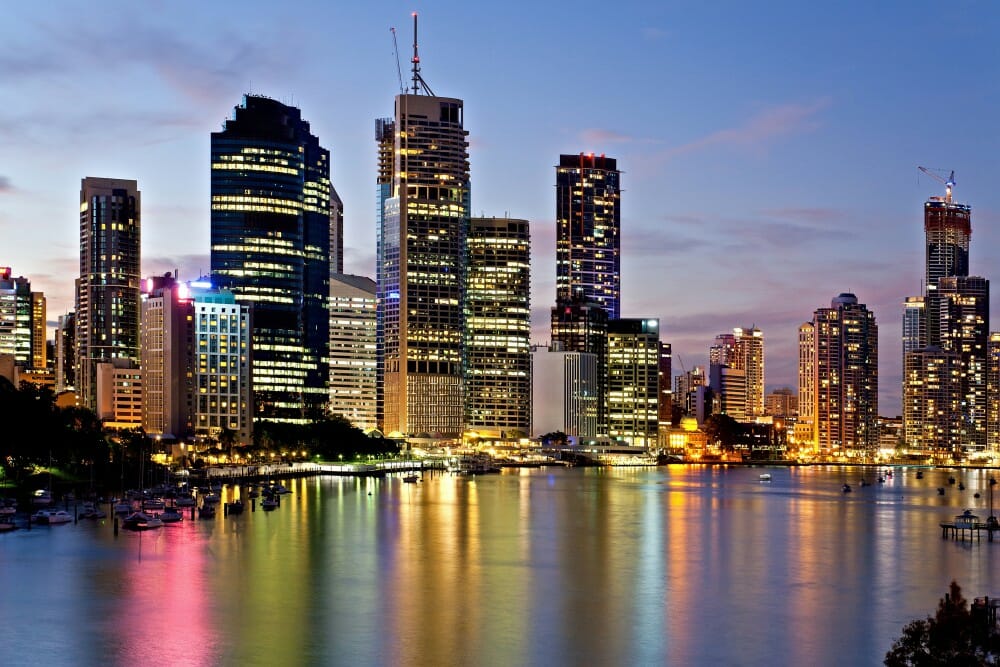
If there’s one country more Brits want to move to than any other, it must be Australia.
By Tim Skelton
The facts speak for themselves. According to official figures, Australia has consistently been the top destination of choice for British long-term migrants (i.e. people leaving the UK for longer than one year) for more than two decades, with an average of more than 30,000 heading down under every year. World Bank figures say there were over 1.2 million UK-born citizens resident in Australia as of 2011.
– So what’s the allure that attracts so many?
– Immigration
– 457 Business Visa
– Employer Nominated Scheme
– Working Holiday Visas
– John Green’s story
– Migration Agent
– Opportunities in Australia
– Working with Australians
– Money and costs
– Australian Life
So What’s the Allure That Attracts So Many?
You’d think we might be put off by the Pommie-bashing that appears to be Australia’s national pastime, but we aren’t. That’s probably because the constant ribbing and the fierce rivalry on the sports field is usually done in good spirit, and though many Aussies may be loathe to admit it we actually have plenty in common, not least of which is a shared sense of humour. Plus there’s a not entirely unfounded perception that the weather, and life in general, is simply better down there.
All things considered the Aussies seem to have it sussed. So what does it take to join them?
Immigration
There are literally dozens of visa categories that allow people to work in Australia – see www.immi.gov.au/Work/Pages/Work.aspx for a detailed breakdown. But they fall into several basic categories, depending on whether you are looking for permanent or temporary status, or whether you are arriving on an employee nominated/sponsored scheme.
Receiving Permanent Residency status can be a lengthy process with applications taking up to 18 months. Your ability to qualify will be judged on your qualifications, age, English language ability, relevant work experience, etc.
Fortunately, there are easier ways in.
457 Business Visa
The 457 Business Visa is how most working Brits arrive. The 457 visa is for skilled workers from outside Australia who have been sponsored and nominated by an employer to work in Australia. They are only valid for up to an initial four years, but can be renewed.
Employers usually make the applications on your behalf. Although this restricts you to working for that company, you can apply again through another company if needed. Again you must meet basic experience and qualifications criteria, but applications are relatively straightforward.
Employer Nominated Scheme
The ENS or Employer Nominated Scheme is a good short cut to permanent residency, if you’re in a key position within a company and they nominate you as essential to their business. As John Green, Managing Director of Sydney-based specialist expat recruiters ACRWORLD (www.acrworld.com), explains: “This bypasses the stringent points criteria associated with permanent residency, as you have the backing of a company who basically say you are great at what you do. That in itself is a clear indication you’d be an asset to Australia.” But be aware that applications can still take up to four months and do involve a full medical check-up.
Working Holiday Visas
At the simpler end of the scale are Working Holiday Visas. The catch is you need to be under 31 to apply. Plus they are limited to one year, and only allow work for any one company for a maximum of six months. However they can be applied for online via the Australian embassy in the UK and are often issued within 48 hours.
John Green’s Story
John Green’s own experience illustrates how complicated the process can be. “I came to Australia in 1999 on a 457 Visa,” he says, “and gained Permanent Residency status via the ENS scheme. I now have dual British/ Australian citizenship. I looked into applying directly for PR as I was under 30, had an honours degree and more than five years’ experience in my field. But I still fell five points short of the requirements.”
Migration Agent
If all this seems confusing there is help out there. Using a migration agent can be recommended if making a personal application. They can navigate you through the minefield of the points system and advise on other pitfalls. One such agency is Four Corners (www.4-corners.com.au), a specialist relocation company that helps around 1,000 Brits move to Australia every year. The company predominantly organises Permanent Residency based on skilled, family or business visas, and guides applicants through the often confusing and daunting application process.
Other recruitment companies are also there to help out. Trevor Whiting, former MD of AP Recruitment, now the owner of JTC International Manpower Services, told us: “Our staff can advise on all aspects of settling in, including accommodation, banking, tax, medical, schools and vehicles. But all the basic info is available on the web or in books.”
For those still thinking of applying personally, or who simply want to prepare for what to expect, the Australian Department of Immigration and Multicultural Affairs website www.immi.gov.au offers a wealth of advice.
It has a range of downloadable booklets covering the practical sides of moving and settling in, taking you through what to do on arrival, from getting a tax number and finding somewhere to live, to what to expect of local customs.
Opportunities in Australia
The biggest question for those considering moving to Australia must be: what are the job prospects like? To find out we asked potential recruiters about current openings.
“We’re focusing on opportunities for British expats in the booming engineering and construction markets,” says John Green of ACRWORLD (formerly AustCorp Recruitment). “The key opportunities are in the oil, gas and power, mining, building and infrastructure markets. We’ve traditionally recruited for the Middle East and Asia, but following strong interest from local companies we’ve set up a new division focusing on Australia.”
“Mining is by far the dominant market at present,” he continues. “The industry is predominantly based in Western Australia – Perth is growing fast on the back of the resources boom. The oil and gas industry in WA is also busy – it seems half of Aberdeen is working in Perth at present, particularly in the offshore sector. Meanwhile, Queensland is also booming in both the building and infrastructure sectors.
“Our clients are very receptive to the British as they work to similar engineering codes and can come up to speed quickly. Many large international companies here are happy to employ as many Brits as they can get their hands on due to a massive skill shortage.”
“Demand outstrips supply across most disciplines,” Peter Stapels, former regional director of the specialist engineering recruiters TAD Technical Careers and Contracts agreed. “There is significant demand in the oil and gas sector, traditional power sectors, and capital works projects and infrastructure generally.” Another emerging sector, he told us, is renewable energy.
And Trevor Whiting makes a similar observation. “There is long- and short-term work available. The market is very buoyant in Australia, especially West Australia.”
More proof, if it were needed, comes from Ross Cooper, a senior recruitment specialist with over 20 years’ experience. “The jobs market in Australia is very strong, especially in Queensland and Western Australia,” he says. “Demand is booming in engineering, construction, operations and commercial management within the mining and infrastructure sectors.”
Working with Australians
Is working in Australia really any different to working at home? After all, half the businesses in London seem to be staffed by Australians these days.
“British expats usually settle in well if they’re aware of what they’re coming to,” thinks Trevor Whiting. “Many construction and maintenance positions are in remote areas, which can mean spending weeks at a time away from family. It’s important that people are aware of what they’re coming out to – it can be a shock for a wife to find she’s got the kids settled somewhere, then the husband/partner is away from home 70% of the time. But by and large the Poms (I’m a Pom too) compare well with the Australian workforce.”
“The working environment is not dissimilar to the UK,” says Simon Winfield. “Perth is a cosmopolitan city and its inhabitants are from a wide cross-section of nationalities.”
“People tend to work shorter hours,” adds another British expat, Tim Ayling. “But conversely they do more in the time they work. Friday afternoons are dead here, and Australia seems to close down from December 20 to late January. The fact that Sydney is usually warm and bright affects people’s attitudes.”
Jason Thackeray spent a year living and working in Sydney. “I’m a senior business analyst for a software company and my moves are always short term,” he explains. “I found the working atmosphere more relaxed. There were lots of practical jokes in our office – and a tendency to get to the pub early on Fridays!”
Originally from Lancashire, Rachael Shanahan has worked for the Northern Territory Government in Darwin since the late 1980s. “The working environment is far less structured and formal,” she says. “The Under-Treasurer once advised a new starter that if he wore a tie on his second day it would be cut off below the knot. The only people who wear jackets here are lawyers from the south.”
Money and Costs
Whereas some areas of Australian life are cheaper than the UK, such as eating out in restaurants, other items such as groceries and rent are around 10% higher. Nevertheless, overall purchasing power is fairly comparable.
One small problem is people’s salary expectations. While there are some good packages on offer, wages are generally realistic and are never going to be as attractive as somewhere like the Middle East. As Trevor Whiting explains: “Expats need to understand it is not a tax-free haven. Life can be great, but the tax is pretty high. Many people expect to live and work without contributing to the country. This can be a problem, so it’s best to view Australia as a lifestyle change and a great place to live as opposed to somewhere to make a quick buck.”
One former expat potential perk was that the 457 Business Visa could, at the employer’s discretion, provide a LAFHA (Living Away From Home Allowance) as an incentive to attract foreign skills. However, national budget reforms in 2012 mean this is no longer available.
Australian Life
The best way to find out about living in Australia is to hear from those who’ve done it.
“I was tired of the English way of life,” says Tim Ayling. “Bad weather, traffic, ‘Chav’ culture. On the whole the Australian lifestyle is far better. People live outside more, and there’s more interaction with other people. Of course Australia isn’t perfect, but I feel safer in Sydney than anywhere in the UK.”
“I’d worked in expat recruitment for three years when I was offered a job in Sydney,” says John Green. “I’d been sending engineers all over the world, but had never worked outside Manchester. I had no idea what to expect. To my surprise it was like a beautiful English summer’s day when I landed in Sydney. The climate is fantastic. In winter it can become cool and we do get stormy weather, but mostly the skies are clear and the sun is shining. Of the expats I meet it’s usually work that brings them over, but the reason they stay is the amazing lifestyle.”
Trevor Whiting sees Australia as a land of opportunity. “It’s a country where a person gets a fair go,” he points out, “and true Australians are very helpful, polite and friendly. Australia has a mix of all nationalities and anyone prepared to have a go usually ends up doing well.”
“We spent most weekends either at the beach or visiting the mountains or vineyards,” says Jason Thackeray. “But day-to-day Sydney was quite manic and more expensive than I expected: not that different to London.”
Melbourne also has its fans. “Australians are laid back and friendly,” says Dan Marks. “Good curries are easier to find in London, but maybe I haven’t been to the right places yet. Generally Melbourne is fantastic for restaurants.”
It’s not just the larger cities that attract expats. “I only planned to stay in Darwin a month,” says Rachael Shanahan. “I arrived as a backpacker, broke and needing to earn money before going to Ayers Rock. But it’s a wonderful place – tropical, safe, pollution-free and with many career opportunities. The food is exceptional and the kids can do a different sport every day of the week, all within a short drive.”
“There are some differences, some similarities,” observes Chris Vine. “They seem to enjoy a better standard of living here, although that’s being eroded by the government. I see Australia as a nation still struggling for an identity, even though it has one. As soon as they get over this we’ll be living in the relaxed happy place I always thought Australia was.”
Is there any down side? “Probably the worst thing was attempting to make friends,” says Jason Thackeray. “I had my work colleagues, but my wife was at home most days and didn’t know a soul at first. I’ve worked in Japan and Taiwan where there are huge expat clubs and societies, but we found it harder moving to a place where everyone speaks English because they assume you’re a local. But despite this we loved it. I’d recommend it to anyone.”
And finally, what about all those scary wild animals the tourist brochures would have you believe Australia is full of? “Since I moved here,’ says Tim Ayling, “I haven’t seen a dangerous spider, snake, shark, crocodile or anything. We think Australia has killers around every corner – don’t believe it for a second!”
The Writer – Tim Skelton (www.timskelton.eu)
What’s Working Down Under
The Federal Government of Australia is maintaining its migration programme to target the country’s skill shortages. Many places in the regional sponsored migration scheme are reserved for skilled workers.
“Skilled migrants are increasingly moving to growth regions and places where there is demand and they are complementing rather than competing with our domestic labour force,” said Minister for Immigration and Citizenship, Chris Bowen.
The need for skilled foreign workers was endorsed in a recent study conducted by the Edith Cowan University in Western Australia (WA) which investigated the costs and benefits of employing people on temporary 457 visas. Despite the expense of bringing foreign skills into Australia – anywhere between $7,000 and $65,000 per person – the study concluded that the benefits outweighed the costs.
“These foreign nationals are generally skilled, accredited, ready and keen to take up the work being offered,” said the report.
Opponents of Julia Gillard’s immigration policies argue that jobs should be taken by Australian nationals. However, most opportunities are in mining and the oil and gas fields of Western Australia. Extracting from numerous interviews, it was clear that many Australians were loathe to relocate and/or had unrealistic expectations.
But what is the situation on the ground? What are the pros and cons of living and working in Australia? How buoyant is the job market? How do salaries balance out against the cost of living? Nexus talked to people who know.
A 29 year old Australian, Brendon Barnes would actually like to leave the country and work in the Middle East. But that’s purely to get experience elsewhere rather than wanting to escape. Having worked on Chevron’s $43bn natural gas project, Brendon has just started a new job as an HSE supervisor on the company’s Wheatstone gas project – the Middle East may have to wait for a while.
“Western Australia is obviously one of the most attractive places to work at the moment as we have a huge number of projects and a lot of mining. The money here is very good with most people getting an average of $160k in the oil and gas industry. And the rosters are OK as I’m working three weeks on and one week off.
“The lifestyle is alright, although there’s not a lot to do in WA and it is a very expensive place to live. Which is probably why we earn so much. An average three-bedroom house is about $400 per week to rent. But Australia is the place to be for work at the moment as there aren’t a lot of skilled workers here and we need them.”
Unlike Brendon, Craig Donaldson left Australia at the beginning of November, heading for the Middle East after an 18-week stretch at a remote mine in Queensland.
“I felt I was reaching the wrong end of the ‘age market’ to be emigrating, even though a 457 visa was offered and would have been funded by the sponsor company. But that’s what the Australian government seem to have in mind – younger.”
[Despite calls from various sectors to at least raise the age bar, the Australian Law Reform Commission has indicated that it will not be making any recommendations to the government in the near future.]“The money is good out there,” said Craig, “above average compared with UK salaries. It’s easier and quicker to get a contract and the 457 visa process can easily be done by the contractor/company while you’re in employment so there’s no break or waiting to get out there. There are all sorts of rotation: I was doing 14-2, 14-2, 14-2 and then was allowed to go home after three months. Every two days off were spent in Townsville on the coast – a field break for health and safety reasons – whereas the mine was two hours inland.
“If you’re in the gas or heavy mining sectors, Australia is a good place to be; the boom is not over. But beware, not all job postings are on the coast where the weather is cooler, there are more things to do and there’s civilisation. I did hear of initial tie-in contracts where people had to work inland for the same company for three to five years before being free to search for an alternative company. As for expats, the general consensus of opinion is that Australia still favours Northern Europeans for work, especially those from England, Scotland, Wales and Ireland.”
Site Superintendent for Downers at a BHP lead, silver and zinc mine in northern Queensland, Jan Barraclough oversees the execution of projects. When working in Mongolia, a lot of his colleagues were Canadians, Americans and Australians, but he got on best with the Ozzies. Despite the chance of a job in Saudi Arabia and a few opportunities in the UK, when the offer came from Australia he felt that it suited his skill set the best. Although he’s been based there for almost seven years and has no plans to leave, Jan looks at the country pragmatically.
“Jobs in Queensland are few and far between. There seems to be a war between the premier and BHP/Rio and Xstrata; the premier won’t win. I think there are more people being laid off for political reasons but it’s a different story in Western Australia. Though everyone is screaming out for engineers, that’s mainly because they’re legally responsible if they sign anything off rather than employment being based on experience.
“On my last job in construction in WA, they were hiring anyone and the Irish descended in droves. What scares me is that what happens here is not the same as in Irish/European industry and safety is so stupidly pursued. Construction is relatively easy money but the safety aspect really scares me. The government has laid down that a company is responsible for safety but that is cascaded downwards to stop at the person who carried out or instigated the task. It’s not unheard of for an individual to cop any blame.”
“Most of the jobs that I have seen are short term contracts and, to be honest, if you haven’t got the experience, don’t come. The Australian workforce is green to the mining industry. But the trouble is that the money is a huge distraction. My last job was paying a stupid amount for something which didn’t require the skills that I’d picked up in maintenance, yet paid almost double my wage as a superintendent on an oil refinery. It’s a huge attraction.
“The road laws are draconian, the cost of living is horrendous and everything is dealt with on a ‘she’ll be alright basis. The actual place is brilliant. I love riding my motorcycle off into the countryside which looks more like the UK than the red dirt image that people have. I have a car that I could only dream of in the UK, work a 2/1 roster, earn good money and have a decent amount of time off. Most unlike Britain.
“Queensland is red hot, at times excessively so; Western Australia is stunning, especially Perth. Oddly, for all the machismo I see in the mines, the people are quite caring, although in the mines you have to learn to attack. They back off if they see you can handle yourself verbally which, at the beginning, I found a little weird. They’re much more in your face than the Brits.
“I rent a three-bedroom detached house with a ‘cave’ where the car and bikes are kept, along with a big TV and all of the boy’s toys. Rent is high but that goes with the cost of living. I don’t think value for money is big here but I don’t think about the cost – I don’t need to! My car sucks petrol and cost around $100 to fill; I couldn’t afford to run it if I wasn’t on ‘mine’ money.”
At the other end of the spectrum, Dave Wood is a relatively new boy on the Ozzie block, having been in the country since May. After working in Saudi for a long time and then in Kuwait, Dave decided to head for Australia in search of a better life.
“Work was dropping off in Kuwait and it was time for a new challenge after 10 years. It was the money that kept us there but I was also looking for a career change.
“The websites say there are a lot of jobs in Australia, and there are, but the companies are not paying the money to get people across. They’d rather wait for people to get over there under their own steam. I was looking at getting our own visas but it’s a lot of money. I did apply to companies online but had no joy, perhaps because there are so many people doing the same thing. However a colleague of mine has contacts in Australia and put me in touch with a company over there.”
They obviously liked what they saw, offered Dave the job, sorted out the visas and paid for the shipping of all his stuff from Kuwait. The fact that he has an MSc in geotechnical engineering might have helped a little.
“I’m working with a Canadian company called Golder Associates as the principal Project Manager in the construction division, involved in ground engineering and infrastructure – basically anything that’s geotechnical.
“It took two months to get all the processing done but it was three months before I got to Australia as my previous employer in Kuwait wanted me to work out my notice. I’m on a temporary 457 visa which allows me to work in Australia for four years and I have an agreement with Golder to stay with them for a minimum of two.
“Financially, we’re worse off in Australia than we were in Kuwait because in Kuwait my salary was tax free, the company paid for a flight home each year, medical insurance and 60% of my daughter’s school fees. My gross salary ($182k) is similar but I don’t get the same benefits and have income tax to pay on top. On the other hand, life in Kuwait was hot, dusty and restrictive whereas here you get the whole package. The wildlife here is great, there are four seasons and it’s a healthy lifestyle. The company pays for personal trainers to come in twice every week, they pay bicycle insurance – they promote biking – and for welfare check-ups. It’s all really good but they don’t pay for medical insurance.”
And some of the perceived bonuses also disappeared within days of the Wood family arriving. Australia has reciprocal agreements with the UK and a few other countries for Medicare, which parallels the NHS in Britain. A standard deduction of 1.5% is made from an individual’s salary but that can be claimed back if you’re working on a 457 visa. Unfortunately, Dave hasn’t paid the necessary contributions in England which means that he doesn’t qualify for Medicare and pays 50% more in private medical insurance. And when he arrived, he could claim the Living Away from Home Allowance (LAFHA) which effectively meant that 30% of his salary was tax free.
“But that was cancelled as of 1 July so I’m basically $1000 worse off. The company has offered to sort out permanent residency which could be done in 6-8 weeks. At least then I’ll be eligible for Medicare!”
For the first month, the family were housed in a hotel while Dave looked around for accommodation. After a month of hunting, he settled on a place in Greensborough, to the north of Melbourne.
“We’re renting a three bedroom house for $2,200 per month. The difference is that it’s 60% smaller than what we had in Kuwait but we’re paying the same amount of money and in Kuwait I didn’t have to pay for utilities. For three months in the winter period in Australia the gas bill came to $600 and there was another $120 for water and sewerage. Mind you, water in Oz is cheap.
“My daughter Zoe – she’s nine – goes to a local state school which is very good, and free. No problem with getting her in: when I said that we lived three minutes away, the headmaster said she could start immediately. When she goes on to High School, we could go for a public school, (instead of a state school) which might provide better tuition but costs around $20,000 per annum.
“People think that Australia is the place to go but it’s not as cheap as people think. Salaries are not dissimilar and house prices are going up although petrol is less expensive. When we were in Kuwait, we used to fly back to the UK to see my relations or to Malaysia to see my wife’s. It would be one or the other, once a year, but flights are expensive and we no longer get them for free. If you come to Australia, don’t expect to be cash rich. You go for the lifestyle, the weather, amenities and things that you can do – the whole package.”
He was surprised to find that at least 50% of company employees were expats: mainly Irish, Scots and English. But even Golder has had redundancies although, to use Dave’s words, it’s more about “shaving off the chaff”.
“Australia is behind the rest of the world and recession is only just starting to kick in here. There were lots of redundancies in the Middle East – Kuwait, Abu Dhabi and Dubai and there was a slowdown in work. Having permanent residency will allow me to stay in Australia, a land of plenty where there are lots of jobs. When they start a project they do finish it and all those that have already started are ongoing. I think I left the Middle East at about the right time.
“I’m happy that I made the right decision. There’s so much more here, things to do, places to see and it’s better for the family. A lot of the Australians who I knew in Kuwait are moving back here.”
Zoe comes into view on the Skype connection. Her thoughts on living in Australia? One word: “Awesome!”
Contractors have their own take on the current situation and employment opportunities for expats.
“There are skills shortages in LNG projects, mainly for mechanical engineers with LNG experience,” said Patrick Prior, “plus API inspectors that have the experience to pass ACIP certification. I expect the main developments over the next five years to be predominantly in the LNG construction sector.”
He added that the perceived ‘slowdown’ in projects mainly related to the mining industry, adversely affected by the government’s new energy tax. And salaries?
“Are stagnating. But the cost of living in WA is rising so your income is getting hit indirectly.”
Paul Daley is currently on the Gladstone LNG pipeline project and happy to be working with McConnell Dowell. But he lives on Vancouver Island in Canada.
“There is a demand for skilled trades without a doubt but it’s an extremely expensive place to live. I wouldn’t consider moving my family here at the present wages. I was making more in WA in 2009 than I am now, and here. WA seems to have tons of work and opportunities, probably because no one wants to work there. It reminds me of the tarsands in Fort Murray Alta: everyone is just there for the money but the only talk is about how soon they are leaving!”
Commenting on the processing of 457 visas, Paul said that while his was issued in a mere 10 days, it can be an extremely long drawn out process.
“I believe it comes down to how badly they need you. At present I’m waiting on a Filipino who I hired four months ago – I’m told weekly that he’s coming.”
Conclusions? There’s no question that the jobs are there in Australia but as Dave Wood said, you go for everything that the country has to offer and not just the money.
A Cautious View
Requests to companies for comment largely fell on deaf ears with only one response sent by email. (RF)
“I am sorry to advise that nobody I work with is willing to put pen to paper and stick their necks out (including me).”
Which perhaps tells its own story. A Senior Consultant for TEAM Executive Consultants based in South Yarra on the outskirts of Melbourne, Alan Allebone has been in the recruitment business for 36 years; his comments are mixed.
“This is probably one of the worst periods I have known, thanks (he believes) to the Gillard government and its lies. Employment opportunities are not as good as they were five years ago, packages are worse now than before and salaries are either stagnating or falling behind. Gillard says projects are on, no, they’re off, and you never know when to believe her or her co-offender Wayne Swann.
“We have a shortage of skilled tradespeople, yet they do little to change that and offer realistic packages and salaries. There’s a huge shortage in building trades, mining is booming and we need more people; and it’s the same story with oil and gas. There’s an acute shortage of doctors and nurses.”
So there are opportunities which, over the next five years, Alan says, lie with mining, oil and gas, water and health.
The Skilled Migrant Lottery
SkillSelect was launched by the Australian government in July to simplify the process of independent emigration under the skilled migrant scheme. Although this continues to be a points-based system, the pass mark was lowered to sixty. However, just because you have the points doesn’t mean that you’re automatically on the plane.
In the first instance you have to complete and file an Expression of Interest (EOI) and then it’s a case of waiting for the invitation to apply for a visa. Naturally it’s imperative that you’re aged 50 or under, that your discipline is cited in the current Skilled Occupations Lists (SOL) and that you have the relevant education, skills and experience.
Since 1 July, more than 10,000 people have submitted EOIs with some 400 invitations issued to date. Engineers, doctors, dentists and nurses dominated the first round of invitations with a strong showing for accountants, ICT analysts and programmers.
Wood Group PSN Australia tells Nexus about it’s ongoing projects in Australia
We provide engineering, procurement, construction (EPC) and integrated maintenance services to the oil & gas, refining, chemicals, coal seam gas, and water industries throughout Australia.
Our current projects include:
– Delivery of brownfield EPC project services to Esso for their operations in the Bass Strait, including the Kipper Tuna Turrum project
– Brownfield EPC services contracts with Woodside for its operations on the northwest shelf
– Maintenance services contract with Caltex at its two Australian refineries
– Maintenance services contract with Melbourne Water
– Under joint venture (Wood Group Wagners) we provide the full-suite of project services to Australia’s CSG industry, from front end and detailed design through to construction and maintenance services.
Current clients include QGC, Santos and Arrow.
Matt Gavin, regional director for WGPSN Australia
Employers Make Like-for-like Strategic Hires
A recent quarterly report from Hays in Australia flags up changes in recruitment thinking in the region it is not clear if the following lists are for locals or expats, or both.
Engineers, Business Development Managers and Purchasing Officers are just three of the many skills that remain in demand as employers make strategic hires.
That’s one finding from the October to December Hays Quarterly Report, released in early October this year “Employers are looking for candidates with like-for-like experience, including in the same industry and on the same systems,” says Nick Deligiannis, Managing Director of Hays in Australia.
“Employers are being more strategic in their hires, so they are also taking their time when they recruit to ensure that each placement is the right person for the job. As a result, the recruitment process has lengthened.
“With employers more stringent in their selection criteria, candidates need to sharpen their existing skills and industry experience to enhance their value.
“Employers meanwhile need to be aware that candidate shortages still exist in many areas. Many organisations have invested in retention strategies to keep their best people, so there’s still a shortage of high quality candidates for certain roles, particularly those that require excellent leadership skills and very specific experience.”
According to the Hays Quarterly Report, such candidates include:
Hays Construction – Project Managers, Site Managers, Project Engineers, Foremen/women, Contracts Administrators, Estimators and Occupational Health & Safety specialists;
Hays Energy – Linesmen/women, Project Managers and Lead Engineers across all disciplines;
Hays Oil & Gas – Drillers, Geologists, Project Engineers, Electrical Engineers, Mechanical Engineers and environmental specialists;
Hays Resources & Mining – Mine Engineers, Geologists, Diesel Fitters, Electricians and Occupational Health & Safety Advisors;
The full list includes many other professions and skilled trades people, along with healthcare, sales and marketing and teaching among them.
The Hays Quarterly Report is available at www.hays.com.au/report
Since the article was written Chris Bowen, a key backer of returned Prime Minister Kevin Rudd, was sworn in as Australia’s third treasurer in 17 years.
Scott Morrison MP was sworn in as the Minister for Immigration and Border Protection on 18 September 2013.