
Best Job Interviewing Tips for Job-Seekers

1. Conduct Research on the Employer, Hiring Manager, Job Opportunity. Success in a job interview starts with a solid foundation of knowledge on the job-seeker’s part. You should understand the employer, the requirements of the job, and the background of the person (or people) interviewing you. The more research you conduct, the more you’ll understand the employer, and the better you’ll be able to answer interview questions
2. Review Common Interview Questions and Prepare Responses. Another key to interview success is preparing responses to expected interview questions. First, inquire as to the type of interview to expect (which you can do by asking your contact person at the organization). Your goal is composing detailed yet concise responses, focusing on specific examples and accomplishments. A good tool for remembering your responses is to put them into story form that you can tell in the interview. No need to memorize responses (in fact, it’s best not to), but at least develop talking points.
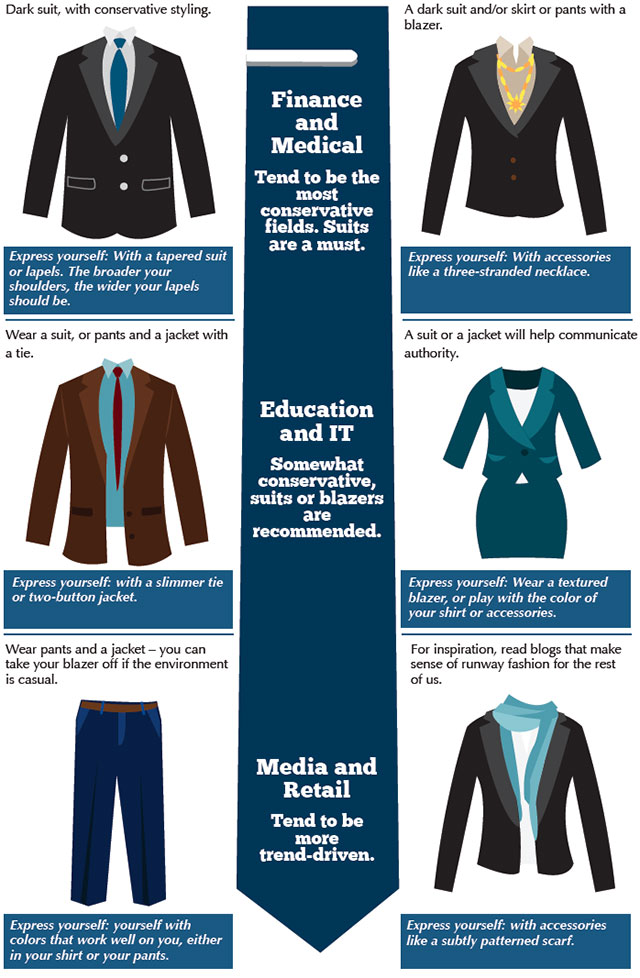
3. Dress for Success. Plan out a wardrobe that fits the organization and its culture, striving for the most professional appearance you can accomplish. Remember that it’s always better to be overdressed than under — and to wear clothing that fits and is clean and pressed. Keep accessories and jewelry to a minimum. Try not to smoke or eat right before the interview — and if possible, brush your teeth or use mouthwash.
4. Arrive on Time for the Interview — and Prepared for Success. There is no excuse for ever arriving late for an interview — other than some sort of disaster. Strive to arrive about 15 minutes before your scheduled interview to complete additional paperwork and allow yourself time to get settled. Arriving a bit early is also a chance to observe the dynamics of the workplace.
The day before the interview, pack up extra copies of your resume or CV and reference list. If you have a portfolio or samples of your work, bring those along too. Finally, remember to pack several pens and a pad of paper to jot notes.
Finally, as you get to the offices, shut off your cell phone. (And if you were chewing gum, get rid of it.)
5. Make Good First Impressions — to Everyone You Encounter. A cardinal rule of interviewing: Be polite and offer warm greetings to everyone you meet — from parking attendant or receptionist to the hiring manager. Employers often are curious how job applicants treat staff members — and your job offer could easily be derailed if you’re rude or arrogant to any of the staff.
When it’s time for the interview, keep in mind that first impressions — the ones interviewers make in the first few seconds of greeting you — can make or break an interview. Make a strong first impression by dressing well (see #3), arriving early (see #4), and when greeting your interviewer, stand, smile, make eye contact, and offer a firm (neither limp and nor bone-crushing) handshake.
Remember that having a positive attitude and expressing enthusiasm for the job and employer are vital in the initial stages of the interview; studies show that hiring managers make critical decisions about job applicants in the first 20 minutes of the interview.
6. Be Authentic, Upbeat, Focused, Confident, Candid, and Concise. Once the interview starts, the key to success is the quality and delivery of your responses. Your goal should always be authenticity, responding truthfully to interview questions. At the same time, your goal is to get to the next step, so you’ll want to provide focused responses that showcase your skills, experience, and fit — with the job and the employer. Provide solid examples of solutions and accomplishments — but keep your responses short and to the point.
By preparing responses to common interview questions, you’ll ideally avoid long, rambling responses that bore interviewers. Always attempt to keep your interview responses short and to the point.
Finally, no matter how much an interviewer might bait you, never badmouth a previous employer, boss, or co-worker. The interview is about you — and making your case that you are the ideal candidate for the job.
7. Remember Body Language, Avoiding Bad Habits. While the content of your interview responses is paramount, poor body language can be a distraction at best — or a reason not to hire you at worst.
Effective forms of body language: smiling, eye contact, solid posture, active listening, nodding.
Detrimental forms of body language: slouching, looking off in the distance, playing with pen, fidgeting in chair, brushing back hair, touching face, chewing gum, mumbling.
8. Ask Insightful Questions. Studies continually show that employers make a judgment about an applicant’s interest in the job by whether or not the interviewee asks questions. Thus, even if the hiring manager was thorough in his or her discussions about the job opening and what is expected, you must ask a few questions.
The smart job-seeker prepares questions to ask days before the interview, adding any additional queries that might arise from the interview.
9. Sell Yourself Throughout and then Close the Deal. An adage in interviewing says the most qualified applicant is not always the one who is hired — which means the hired candidate is often the job-seeker who does the best job in responding to interview questions and showcasing his or her fit with the job, department, and organization.
Some liken the job interview to a sales call. You are the salesperson — and the product you are selling to the employer is your ability to fill the organization’s needs, solve its problems, propel its success.
Finally, as the interview winds down, ask about the next steps in the process and the timetable the employer expects to use to make a decision about the position. If you are applying for a sales job — or a position requiring equivalent aggressiveness — consider asking for the job at the end of the interview.
10. Thank Interviewer(s) in Person, by Email, and Postal Mail. As you have already seen from previous tips, common courtesy and politeness go far in interviewing; thus, the importance of thanking each person who interviews you should come as no surprise. Start the process while at the interview, thanking each person who interviewed you. Writing thank-you emails and notes shortly after the interview will not get you the job offer, but doing so will certainly give you an edge over any of the other finalists who did not bother to send thank-you’s.
Final Thoughts on Job Interview Success
Succeeding in job interviews takes research, practice, and persistence. The more effort you put into your interview preparation, the more success you’ll see in obtaining job offers — especially if you remember and follow these 10 job interviewing tips.
STAR Interviewing Response Technique for Success in Behavioral Job Interviews
One strategy for job-seekers preparing for behavioral interviews is to use the STAR Technique, as outlined below. (This technique is often referred to as the SAR and PAR techniques as well.)
Situation or Task |
Describe the situation that you were in or the task that you needed to accomplish. You must describe a specific event or situation, not a generalized description of what you have done in the past. Be sure to give enough detail for the interviewer to understand. This situation can be from a previous job, from a volunteer experience, or any relevant event. |
Action you took |
Describe the action you took and be sure to keep the focus on you. Even if you are discussing a group project or effort, describe what you did — not the efforts of the team. Don’t tell what you might do, tell what you did. |
Results you achieved |
What happened? How did the event end? What did you accomplish? What did you learn? |
SHARE Model
A similar method to the STAR Method is the SHARE Model for responding to behavioral-based job interview questions:
S
- — Situation; describe a specific situation;
H
- — Hinderances; identify any hindrances or challenges faced;
A
- — Action; explain the action(s) you took in response;
R
- — Results; discuss the results or outcomes from your action(s);
E
- — Evaluate; explain and evaluate what you learned from the experience.
Interview questions you may be asked

Before attending an interview you should think about your responses to the following questions. Your answers may depend on the job or company in question, so you should go through your responses just before each interview.
Why do you want this job?
Think carefully about this question. Stress the positive aspects which have attracted you to applying for this position. Do not mention the negative aspects of your current job or the job in question.
What qualities do you think will be required for this job?
The job specification I sent you for the job may help you a little bit, but you should also think of the other qualities that may be required. These may include team player, leadership ability, communication skills, interpersonal skills, problem solving, analytical skills, etc.
Why do you want to work for this company?
Emphasise the positive reasons why you want to join their company, but avoid aspects such as more money or shorter hours. These would not endear you to a prospective employer.
What do you know about this company?
This is your chance to impress the interviewer with your knowledge of their company. Give them a run down of their products/services, news, customers, etc. This shows that you are interested in the company and have done some research.
You have not done this sort of job before. How will you cope/succeed?
Try to show your qualities that will enable you to be successful in this position.
Why should we employ you?
This is your chance to shine. Explain your achievements in your previous roles, which are relevant to this position and the experience that you have gained, which can be used in this role.
What do you like and dislike about the job we are discussing?
Explain why you are interested in the job and ask questions about what you possibly dislike. Stay positive about it.
Why did you choose a career in …?
Be positive about your reasons. If you have changed careers make a logical argument as to why you did so.
career - this should come from your experience and achievements, stress the transferable skills you have, such as leadership ability, etc.
How much does your last job resemble the one you are applying for? What are the differences?
The interviewer is trying to see how well you would fit in to the position you are applying for. So you should stress the similarities rather than the differences. When it comes to discussing the differences it will help your case if you can show that either you have done something similar in the past or that you can quickly pick up the new skills.
What do you think of the last company you worked for?
You should stress ONLY the positive aspects of your last company. Tell them about the training you received or the work related experience you gained.
How long have you been looking for a new job?
If you have been unemployed for a long time this may be a rather tricky question to answer. But be honest. If you have been away on holiday or done some voluntary work you could mention this.
Do you prefer to work in a small, medium or large company?
Remember why you applied for this role! You can explain what you like about small, medium or large companies, and put a focus on the type of company you are applying to for this role.
Why are you looking for in a new job?
Explain your reasons for moving, and think about why you applied to this job and think what interests you in it.
What would your ideal job be?
Explain the similar aspects with this role to your ideal job, and you can think of the main reasons why you are interested in it.
An ideal job might include things like challenging work, team work, nice colleagues, good career prospects, good team atmosphere, opportunity to learn new skills, etc.
Are you considering any other positions at the moment?
If you are say so, but do not give too many details away. If you do not have any other job offers at the moment, just tell them.
How would you describe yourself? / How would others describe you?
Pick your best attributes and achievements from your career.
How could you improve yourself?
Do not mention anything negative about yourself - the interviewer is looking for a chink in your armour.
Did you feel you progressed satisfactorily in your last job?
If you progressed faster than normal you should say so. If growth was not as good as expected then be careful how you phrase this.
How do you handle criticism?
You should explain the positive aspects of criticism, and think of an experience you had where it was useful to get criticism in work.
Are you accepted into a team quickly?
Hopefully you can answer “Yes” to this question.
Can you act on your own initiative?
Think of an example where you have had to do something on your own initiative in work.
What motivates you?
List your motivations such as: career growth, opportunity to learn new skills, good co-workers, etc.
Can you work under pressure?
Think of when you have had to work under pressure and how you reacted to it. You could also ask how much pressure the job involves.
How many hours are you prepared to work?
You should be prepared to work the necessary hours to get the job done on time.
What are your career goals?
Link in all your goals and the ones that are relevant to the company who is interviewing you.
What interests do you have outside work?
Your hobbies and interests can tell an employer a lot about you, including whether you are sociable or solitary, and whether you can take on ‘leadership’ roles. So you should think about which interests relate to this job and the company.
Are you prepared to relocate?
If you are, say so. If it’s maybe, then you have to explain that it could depend on location, salary, etc…
What did you earn in your last job? What level of salary are you looking for now?
This should generally be discussed at the end of an interview or when all the job elements have been clarified.
You have to be honest and also remember the salary discussed when we spoke to you about the role. The company also knows more or less what you would be looking for. You have to be careful with this, as if you were on a higher salary you need to explain why you are interested in less, but also if you were at a low salary, they will wonder if you have the capacities required. The salary should more or less reflect your career level.
What will your referees say about you?
You should hope for good references.
Other general questions
1.How would you feel spending your day on the phone? Give positive aspects
2.What computer skills do you have? Be honest
3.How would you deal with a difficult customer over the telephone? Think of previous experience that would relate and explain it.
4.What qualities do you think are required for this position?
5.What are your strengths/weaknesses? Think of 2 of each
6.Why would you want a position like this? List your goals and interests
7.What can you bring to the company? Relevant experience and detail your attitude and personality
8.Talk me through your work experience to date? Remember your CV, don’t read it
9.How does this work experience relate to this position? List similar experience
10.What are the attributes of a strong customer service person in your eyes? Think customer service
11.School/University, what were your favourite subjects?
12.How would you describe yourself?
13.How do you handle pressure or stress in the work environment? List example of past experience
14.Do you like working in a team environment or do you prefer working alone? Think about your experience in a team environment but also your autonomy and describe
15.Where do you see yourself in 2 years time? Be realistic about it. Remember that companies want you to be with them long term
Difficult questions
If you cannot answer a question you might be honest and say that you don’t really know.
Questions you may want to ask an interviewer
The interview is a two-way process. The company interviewing you will want to find out whether you are suitable for the position and you will want to find out if the company and position are right for you. You should therefore ensure that you have enough information to make up your mind whether you want the job. For example:
- What will be my responsibilities?
- Who will I report to?
- Who are your customers?
- What training do you provide?
- What is the next step?
Factors that can cost you the interview/job
- Being unprepared for the interview.
- Being late or not presentable for the interview
- Not showing your motivation for the role and company
- Saying unfavourable things about previous employers.
- Not being able to communicate clearly and effectively.
- Not getting across your suitability for the role and relevant experience
- Being aggressive or acting in a superior way.
- Making excuses for failings.
- Poor/ limp handshake.
Avoid These 10 Job Interview Bloopers — Critical Job-Seeker Interviewing Mistakes
We’ve all heard stories of job candidates who looked great on paper but who were absolute disasters in person. With fewer and fewer interview opportunities available in this competitive market, it’s essential to make the best possible first impression.
You can learn from the mistakes of others and avoid the top 10 worst interview blunders.
Poor handshake: The three-second handshake that starts the interview is your first opportunity to create a great impression. But all too often an interview is blown right from the start by an ineffective handshake. Once you’ve delivered a poor handshake, it’s nearly impossible to recover your efforts to build rapport. Here are some examples:
- The Limp Hand (or “dead fish”): Gives the impression of disinterest or weakness;
- The Tips of the Fingers: Shows lack of ability to engage;
- The Arm Pump: Sincerity is questionable, much like an overly aggressive salesman.
Even if you’re a seasoned professional, don’t assume you have avoided these pitfalls. Your handshake may be telling more about you than you know. Ask for honest critiques from several friends who aren’t afraid to tell you the truth.
Talking too much: In my recruiting days, I abhorred over-talkative candidates. So did most of my client employers. Over-talking takes a couple of forms:
- Taking too long to answer direct questions. The impression: This candidate just can’t get to the point.
- Nervous talkers. The impression: This candidate is covering up something or is outright lying.
To avoid either of these forms of over-talking, practice answering questions in a direct manner. Avoid nervous talking by preparing for your interview with role-play
Talking negatively about current or past employers/managers: The fastest way to talk yourself out of a new job is to say negative things. Even if your last boss was Attila the Hun, never, never state your ill feelings about him/her. No matter how reasonable your complaints,you will come out the loser if you show that you disrespect your boss because the interviewer will assume that you would similarly trash him or her. When faced with the challenge of talking about former employers, make sure you are prepared with a positive spin on your experiences.
Showing up late or too early: One of the first lessons in job-search etiquette is to show up on time for interviews. Many job-seekers don’t realize, however, that showing up too early often creates a poor first impression as well. Arriving more than 10 minutes early for an interview is a dead giveaway that the job-seeker has too much time on his or her hands, much like the last one picked for the softball team. Don’t diminish your candidate desirability by appearing desperate. Act as if your time were as valuable as the interviewer’s. Always arrive on time, but never more than 10 minutes early.
Treating the receptionist rudely: Since the first person you meet on an interview is usually a receptionist, this encounter represents the first impression you’ll make. Don’t mistake low rank for low input. Often that receptionist’s job is to usher you into your interview. The receptionist has the power to pave your way positively or negatively before you even set eyes on the interviewer. The interviewer may also solicit the receptionist’s opinion of you after you leave.
Asking about benefits, vacation time, or salary: What if a car salesman asked to see your credit report before allowing you to test drive the cars? That would be ridiculous, and you’d walk away in disgust. The effect is about the same when a job-seeker asks about benefits or other employee perks during the first interview. Wait until you’ve won the employer over before beginning that discussion.
Not preparing for the interview: Nothing communicates disinterest like a candidate who hasn’t bothered to do pre-interview research. On the flip side, the quickest way to a good impression is to demonstrate your interest with a few well-thought-out questions that reflect your knowledge of their organization.
Verbal ticks: An ill-at-ease candidate seldom makes a good impression. The first signs of nervousness are verbal ticks. We all have them from time to time — “umm,” “like,” “you know.” Ignore the butterflies in your stomach and put up a front of calm confidence by avoiding verbal ticks. You can also sometimes avoid verbal ticks by pausing for a few seconds to gather your thoughts before each response.
One of the best ways to reduce or eliminate them is through role-play. Practice sharing your best success stories ahead of time, and you’ll feel more relaxed during the real interview.
Not enough/too much eye contact: Either situation can create a negative effect. Avoid eye contact and you’ll seem shifty, untruthful, or disinterested; offer too much eye contact, and you’ll wear the interviewer out. If you sometimes have trouble with eye-contact balance, work this issue out ahead of time in an interview practice session with a friend.
Failure to match communication styles: It’s almost impossible to make a good first impression if you can’t communicate effectively with an interviewer. But you can easily change that situation by mirroring the way the interviewer treats you. For instance:
- If the interviewer seems all business, don’t attempt to loosen him/her up with a joke or story. Be succinct and businesslike.
- If the interviewer is personable, try discussing his/her interests. Often the items on display in the office can offer a clue.
- If asked a direct question, answer directly. Then follow up by asking if more information is needed.
Allowing the interviewer to set the tone of conversation can vastly improve your chances of making a favorable impression. You can put the interviewer at ease — and make yourself seem more like him or her — by mirroring his or her communication style.
Final Thoughts on Improving Interviewing Skills
Just as a strong resume wins you an opportunity to interview, strong interview skills will win you consideration for the job. You already know that you won’t earn an interview unless your resume sets you apart as a candidate of choice. Similarly, you should know that polishing your interview skills can mean the difference between getting the job offer — and being a runner-up.
Start your job search with a resume that creates a stellar first impression, then back those facts up with your extraordinary interview skills. You will have made yourself a better candidate by avoiding these 10 interview pitfalls. And no one will have to talk about you as the candidate who “almost” got the job.
Courtesy of Deborah Walker; Certified Career Management Coach. Her expertise includes resume writing and career coaching. She holds membership in the National Resume Writer’s Association. As a former headhunter, her advice comes from an insider’s prospective based on years working with HR professionals and corporate hiring managers. Visit Deb on the Web.
Questions You Can Ask at the Job Interview
Job-seekers need to ask questions of the interviewer(s) in job interviews; here’s a list of some questions you can ask your prospective employer.
Toward the end of most job interviews, the interviewer will give you the opportunity to ask questions. You must ask at least one question; to do otherwise often signals the interviewer that you don’t really have any interest in the job or the company. On the other hand, do not ask questions where the answer is obvious or readily available — or when the topic has already been thoroughly discussed in the interview. And never ask about salary and benefit issues until those subjects are raised by the employer. The best questions to ask should come directly from your research of the employer, but the following are some more general questions you can ask of your interviewer(s).
Questions a job-seeker might ask at a job interview:
- Can you describe a typical day for someone in this position?
- What is the top priority of the person who accepts this job?
- What are the day-to-day expectations and responsibilities of this job?
- How will my leadership responsibilities and performance be measured? And by whom? How often?
- Can you describe the company’s (or division’s or department’s) management style?
- Can you discuss your take on the company’s corporate culture?
- How would you describe the company’s values?
- How would you characterize the management philosophy of this organization? Of your department?
- Does the organization support ongoing training and education for employees to stay current in their fields?
- What do you think is the greatest opportunity facing the organization in the near future? The biggest threat?
- Why did you come to work here? What keeps you here?
- How is this department perceived within the organization?
- Is there a formal process for advancement within the organization?
- What are the traits and skills of people who are the most successful within the organization?
- What is the organization’s policy on transfers to other divisions or other offices?
- Are lateral or rotational job moves available?
Make a Lasting Impression at Job Interviews Using Questions
Seth was just finishing an excellent interview. He had aced every question the panel threw at him. Questions ranged from how he had dealt with difficult customers to his management style; he even gave specific examples of how he had handled issues in the past.
The last question came up. It seemed to Seth more like a formality in contrast to the difficult questions he had already answered; yet this question could have been one of his most powerful allies in landing this position. That question was, “Do you have any questions for me?”
Unfortunately for Seth, his best answer was “No, you’ve pretty much covered all I need to know.” He missed a great opportunity to make himself stand out from the rest.
This final, standard question is often asked of applicants by both HR and hiring managers. Most of the time, managers expect to be asked about salary, benefits, or other perks. Although these are important issues, the candidate should never bring them up by in a first interview.
In a job market where you may be among five other stellar candidates, it is essential to use every opportunity to make a lasting impression — and one way to do so is by asking questions at the interview. Here’s how to do it.
Impress the interviewer with some questions suggested below. This approach accomplishes four main purposes:
- To discover specific needs of the hiring manager that you can address and meet.
- To establish an impression of you as extremely interested in the position and truly curious about the company and the opportunities available.
- To learn about the corporate culture and the company as a whole, including company values, ethics, and the way personnel are managed.
- To uncover and discuss any concerns the hiring manager has about your candidacy.
First, the company obviously has a need; otherwise, the hiring manager would not be interviewing candidates for an open position. Learn to look beyond the job title and what you think that role should entail. Find out what specific problems are plaguing the company and tell how you have handled similar problems in the past. For example you could ask:
- “In six months, what would the successful candidate have accomplished?”
- “What is the most important and pressing problem for the new hire to tackle?”
- “What would you like done differently by the next person who fills this job?”
Each of these questions will reveal an issue or problem within the company that will affect your everyday work. If you can establish yourself as someone who has already seen and tackled similar problems, your perceived value will skyrocket.
Second, companies are looking for energetic and enthusiastic employees who are excited about the company and the opportunities they present. These candidates are viewed as more likely to stay with the company in the long run. In the current job market many people may have a skillset similar to yours. Your interest and enthusiasm about the company may be the deciding factor on an offer. Some questions to express this interest could include:
- “I noted on the company Website that your firm’s mission is _____________. How do you see the successful candidate contributing to that mission?”
- “What are the company’s goals, both short and long term?”
- “How does this department affect the company’s profit?”
Listen to the responses. Research the company extensively before the interview so that you can intelligently discuss its products and services. Remember, not always does the most qualified candidate get the job. Sometimes it goes to the most enthusiastic.
Third, one of the most important things to remember in any interview is that you are interviewing the employer just as much as the employer is interviewing you. Asking the right questions could keep you out of the next Enron. It could also reveal to you a company that truly values its human capital and genuinely wants to contribute to an employee’s success. To discern corporate culture and company values you could ask:
- “What is the company’s code of ethics and how is it communicated to employees?”
- “How would you describe the company culture and personality?”
- “How are risk taking and creativity rewarded?”
- “How does the company recognize outstanding employees?”
- “What do you value about this company, and why do you enjoy working here?”
Hiring managers who work for a company that values its employees will readily have answers to the above questions. Uncertainty about the answers, or discomfort could indicate a problem. Probe deeper to determine the issues by conducting targeted research on the company or by speaking directly with employees, if possible.
Fourth and finally, thank the interviewer for his or her time, express your interest and determine the next steps in the hiring process. This is an excellent time to address any concerns or hesitations your interviewer may have. Some questions that might be beneficial are:
- “Do you have concerns or hesitations based on anything we have discussed regarding my candidacy that I could address for you before I go?”
- “What is the next step in the process?”
- “I am very excited about this position and feel that it would be a great fit. What would it take to close the deal on this position today?”
Final Thoughts on Job Interviewing Success
In a job market flooded with qualified candidates you must take every opportunity to make yourself memorable and increase your perceived value in an interview. Find out what matters most to the hiring manager. When invited to ask questions, ASK THEM! But make those questions count. Show your interest in the company and establish yourself as a proactive thinker ready to find out what the tough challenges are and to tackle them. Just as important as giving the right answers in an interview is … asking the right questions.
Closing the Sale and Overcoming Objections in the Job Interview
The best job-hunters understand the power of marketing in the job-search, and comparing the job interview to a sales call is vital to achieving greater success — in obtaining the job offers you seek. But the burden is not all on the job-seeker, because the employer also sees the job interview as a sales call — and just as much as you are selling yourself as the product to be purchased by the employer, the hiring manager is also selling the employer’s value to you.
And anyone who knows even just a little about sales knows that the key to success is in overcoming objections and then closing the sale. This article shows you how you can do the same in the job interview — and how using this technique will take you one step closer to the job offer.
Overcoming Hiring Manager Objections
In sales, it’s a proven theory that if you can overcome all your prospect’s objections, s/he will have no choice but to agree to your offer. And while you are not doing the exact same thing for the same reasons, the logic holds that if you can overcome all the objections of the hiring manager, then you’ll be more likely to move on to the next step in the process.
Overcoming objectives can be done in a number of different ways, but the keys are to acknowledge the interviewer’s objection, understand the true cause of the objection, and respond with enough information to defuse the objection. It’s best to anticipate these potential objections before the job interview so you can practice your responses.
What do you do if no objections are raised? It might not mean that there none exist, so it’s best to probe to uncover any — again, because it’s much better to get them out in the open and address them than to let them sit, clouding your future. As the interview winds down, if no objections have been raised, consider asking a question such as, “Do you see any concerns that stand in the way of my succeeding in this position?”
Some Common Objections Raised by Employers in Job Interviews
Here’s a collection of some of the more common objections raised in job interviews.
“I’m concerned you have too much experience for this position.”
- This comment is the most loaded of objections because it can mean one of several things — and it is your job to discover which one it is. The good news is that if you got the interview, your qualifications make you an attractive candidate. Most often, this comment is concealing a concern about your age, attitude, or motivation. Obviously, the interviewer cannot ask your age, but someone with a lot of experience is often older, and the employer may have some concerns about fit, especially if the rest of the department is younger. Older workers also sometimes put out a vibe that because of their vast experience they know it all — and are seen as having an attitude problem. Finally, if you have years in the same type of position, some interviewers will question your drive and motivation to move ahead (incorrectly assuming that everyone wants to do so).
“I’m not sure we can pay you the salary you are seeking.”
- Related to the over-experience comment is the salary issue. Employers are always concerned about salary — and hiring employees that best fit their budgets — so the employer may be interested in you, but has a nagging question about affording you. In this case, it’s important to defuse the objection without giving away too much information so that you still have leverage if you do get the job offer.
“I’m just not sure you have the experience for this position.”
- On the other side of the spectrum is a job-seeker who shows potential — and thus gets the interview — but with whom the employer has some lingering doubts. Perhaps it is not quite enough years of experience, or perhaps the experience is in a different field. As a job-seeker, your goal is to show exactly how — regardless of the time spent or where it was spent — you have the skills to get the job done. One great tool for this objection is a career portfolio, in which you not only can tell the story of how you are qualified — but show it as well through examples in your portfolio.
“I’m not sure you would fit into the team.”
- So many jobs require workers to participate in one or more teams that it seems inconceivable that a job-seeker would not have experience working in teams, but if for some reason you do not have much experience in teamwork, you must demonstrate that you understand the importance of teams in the workplace and how you can be a team player. Demonstrating your knowledge of the organizational culture will also be a plus in this situation.
“I’m concerned about the number of jobs you’ve held in such a short period of time.”
- If you have had an unusual number of jobs in the last few years, some interviewers will raise the job-hopper question, so you need to be able to explain the logic of your job history. It’s important to note that even though employers are not as loyal to their employees as in the past, they still expect employees to be loyal to them.
“We really like you but are just not sure where you fit.”
- The good news about this objection is that you have won half the battle because the employer likes you and wants to hire you, but is simply unsure of how to best utilize your skills. The key to your response has to be having the confidence in yourself and the knowledge about the employer to explain clearly why you are a fit for the position you are interviewing for.
“Were you fired from your last job?”
- Unless the employer has inside information about you — or you are currently unemployed while job-hunting — this should not be a common objection. However, if you have been downsized or fired from your last job, you should at least anticipate this objection. It’s pretty common to be defensive about the subject since no one likes being fired — even if you were let go simply because your job was eliminated — so you need to put that behind you when responding to this objection.
Closing the Sale
Once you have made your salient points about how you are the perfect candidate for the position and overcome any objections from the interviewer, your final step is closing the sale. How aggressive you are in this step is sometimes the difference between an offer and nothing, but it is up to you to decide how strongly you want to close the interview. At a minimum, you should ask about the next step in the process, how many other candidates there are, and an estimate of the timetable for completing the process — what some marketers might call the trial close, where you are feeling out the interviewer. However, if you truly feel the interview was a good one, that you are a great fit for the position, and that you have overcome all the interviewer’s objections, you should ask for the job. Best case, you’ll get the offer; worst case, you’ll be told you need to wait.
Final Thoughts on Overcoming Objections in Job Interviews
In attempting to overcome these objections remember to not dwell on the objection, but instead, once you are sure you understand it, turn it around to overcome it. If you do have a weakness that the interviewer has uncovered, find a way to turn it into a strength. For example, if you have been fired from your last job, find a way to showcase how the experience has given you new insight into making sure your boss knows the contributions you are making.
And for those of you who do not have experience in sales, one piece of warning. While it is helpful to think of the interview as a sales call, do be careful not to overdo it — to not oversell yourself to the point where you actually turn the interviewer off about your candidacy. You need to walk the line between being too modest about your accomplishments and fit with the organization and talking too much about yourself.
Finally, always remember that the interview really is a conversation between two parties who are both trying to showcase their best points. Your goal is to leave the interview knowing you did your best to sell your unique mix of skills and accomplishments while overcoming any objections raised by the interviewer.
 Courtesy of Katharine Hansen, Ph.D., creative director and associate publisher of Quintessential Careers, is an educator, author, and blogger who provides content for Quintessential Careers, edits QuintZine, an electronic newsletter for jobseekers, and blogs about storytelling in the job search at A Storied Career. Katharine, who earned her PhD in organizational behavior from Union Institute & University, Cincinnati, OH, is author of Dynamic Cover Letters for New Graduatesand A Foot in the Door: Networking Your Way into the Hidden Job Market (both published by Ten Speed Press), as well as Top Notch Executive Resumes (Career Press); and with Randall S. Hansen, Ph.D., Dynamic Cover Letters, Write Your Way to a Higher GPA (Ten Speed), and The Complete Idiot’s Guide to Study Skills (Alpha). Visit her personal Website or reach her by e-mail at kathy(at)quintcareers.com. Check out Dr. Hansen on GooglePlus.
10 Tips for Writing a Job-Search Interview Thank-You Letter
Many job-seekers put so much energy and focus on succeeding in the job interview that they overlook a key element that comes right after the interview — writing thank-you letters to each person you interact with during your visit with the employer.
Here are 10 tips to help you write successful and effective interview thank-you letters.
1. Just do it — and do it quickly. You should shoot for sending out your thank-you letters within 24 hours of your interview — and no longer than about two or three days afterward. If you have a hard time composing letters and are tempted to not write any fight that urge and force yourself to write something. Studies continue to show that the vast majority of job-seekers do NOT send thank-you letters and that by doing so you WILL stand out from the other applicants who do not send thank-you letters. As for style and delivery method — where speed is of utmost importance either email your thank-you letters or drop them off the next day. As for handwritten or keystroked — it’s more a matter of personal preference though some feel a typed letter is more professional than a hand-written one.
2. Compose (and personalize) thank-you letters to each person you met. Each thank-you letter you write does not need to be completely different — you can develop a few paragraphs that may be basically the same in each letter — but you should always try and personalize elements of each letter typically to something specific from your meeting (such as a shared interest or acquaintance or a key skill mentioned). Make certain each person’s name spelling and title is correct before sending. (Collecting business cards during the interview is helpful but if it’s too late for that you can always call the department receptionist/assistant and ask for assistance in getting everyone correct.)
3. Be genuine in your appreciation. Write your thank-you note from the heart. Everyone values authentic communications so rather than using a boring thank-you letter template from the Web use your own words and feelings to compose your letter. Find a way to express your genuine feelings of appreciation and connection with the interviewer. One word of caution: Don’t go overboard with (fake) praise and appreciation; keep it honest and simple. (In terms of looking for examples certainly feel free to review our sample thank-you letters for style and technique but then compose your letters in your own words.)
3. Reinforce your interest and enthusiasm in the position and employer. One of the first things your thank-you letter should do is stress your interest in the employer and the job you are seeking. Make it clear that you are excited about the possibility of working with the organization. A great way to show your enthusiasm is emphasizing something positive you discovered about the employer during the interview — or from your research.
4. Highlight your key selling points and fit. One of the main goals of an employment interview is to determine if there is a good fit between the interviewee (you the job-seeker) and the employer; thus one of your key goals in your thank-you letter should be to clearly express your strong fit with the organization. At the same time it’s also good to mention a few of your key selling points — points that match exactly to the needs/requirements of the position you are seeking. Even a thank-you letter is a chance to market yourself (and add distance to your competition).
5. Address any weaknesses or misunderstandings. In the best of job interviews an interviewer can question some element of your qualifications — perhaps not quite enough experience or not quite the right experience or perhaps not having the right education or certifications. If any questions about your qualifications were raised in the interview — and even if you addressed them well in your response — carefully reiterate in your thank-you letter that you have all the qualifications (and ideally more) than the employer seeks. Don’t go overboard here but make your case.
6. Add content/points not addressed in interviews. Job interviews are stressful situations and even with excellent preparation we can sometimes forget to mention something that may be a key selling point. If that happened to you no worries as you can add the point in your thank-you letter. As you are summarizing your fit with the position and employer you simply add the additional point you forgot to make in the interview.
7. Keep thank-you letters short concise. Like cover letters your thank-you letter should be fairly short and concise — unless you feel you need to add information or reinforce a question that arose about your qualifications. Most thank-you letters will be about a page long — about four paragraphs in total — whether hand-written keystroked or emailed.
8. Close your thank-you letter with repeated thanks and appreciation. End your thank-you letter with a short paragraph thanking the person again for taking the time to meet with you and expressing your strong interest in the position and your hope and interest in seeing him/her again soon.
9. Carefully proofread/edit. One of the worst things you can do is to write an amazing thank-you letter but realize after you sent it that it had a typo misspelling or poor construction. Especially check and double-check the spelling of the person and name of the employer. Write a draft of your letter and come back to it later to edit and polish it. Read it aloud to hear how it flows. Have someone else read it for errors. Review your final version carefully before sending it. While first impressions are certainly critical remember too that final impressions matter as well.
10. Remember to thank everyone. A job interview starts the moment you arrive and ends when you leave thus anyone you spend time with during the day — whether in a traditional interview or over a meal — needs an individualized thank-you for spending time with you. And of course once your job-search is over it’s also a nice gesture to thank everyone else who helped you get the position such as your references.
 Courtesy of Dr. Randall S. Hansen: Founder of Quintessential Careers one of the oldest and most comprehensive career development sites on the Web as well CEO ofEmpoweringSites.com. He is also founder of MyCollegeSuccessStory.com andEnhanceMyVocabulary.com. He is publisher of Quintessential Careers Pressincluding the Quintessential Careers electronic newsletter QuintZine. Dr. Hansen is also a published author with several books chapters in books and hundreds of articles. He’s often quoted in the media and conducts empowering workshops around the country. Finally Dr. Hansen is also an educator having taught at the college level for more than 15 years. Visit his personal Website or reach him by email atrandall(at)quintcareers.com. Check out Dr. Hansen on GooglePlus.
Job Interviewing Do’s and Don’ts for Job-Seekers

Here are the keys to successful job interviewing. Job-seekers who follow these simple rules and guidelines should achieve success in this important phase of job-hunting.
- Do take a practice run to the location where you are having the interview — or otherwise be sure you know exactly where it is and how long it takes to get there.
- Do your research and know the type of job interview you will encounter. And do prepare and practice for the interview, but don’tmemorize or over-rehearse your answers.
- Do dress the part for the job, the company, the industry. And do err on the side of conservatism. If you’re not sure, consider reading our article, When Job-Hunting: Dress for Success. Don’t dress for the Job you have, dress for the job you WANT.
- Do plan to arrive about 10 minutes early. Late arrival for a job interview is never excusable. If you are running late, do phone the company.
- Do greet the receptionist or assistant with courtesy and respect. This situation is where you make your first impression with the employer.
- Don’t chew gum during the interview.
- If presented with a job application,do fill it out neatly, completely, and accurately.
- Do bring extra resumes to the interview. (Even better, if you have a job-skills portfolio, do bring that with you to the interview.)
- Don’t rely on your application or resume to do the selling for you. No matter how qualified you are for the position, you will need to sell yourself to the interviewer.
- Do greet the interviewer(s) by title (Ms., Mr., Dr.) and last name if you are sure of the pronunciation. (If you’re not sure, do ask the receptionist about the pronunciation before going into the interview.
- Do shake hands firmly. Don’t have a limp or clammy handshake!
- Do wait until you are offered a chair before sitting. And do remember body language and posture: sit upright and look alert and interested at all times. Don’t fidget or slouch.
- Don’t tell jokes during the interview.
- Do make good eye contact with your interviewer(s).
- Do show enthusiasm in the position and the company.
- Don’t smoke, even if the interviewer does and offers you a cigarette. And don’tsmoke beforehand so that you smell like smoke. Do brush your teeth, use mouthwash, or have a breath mint before the interview.
- Do avoid using poor language, slang, and pause words (such as “like,” “uh,” and “um”).
- Don’t be soft-spoken. A forceful voice projects confidence.
- Do have a high confidence and energy level, but don’t be overly aggressive.
- Don’t act as though you would take any job or are desperate for employment.
- Do avoid controversial topics.
- Don’t say anything negative about former colleagues, supervisors, or employers.
- Do make sure that your good points come across to the interviewer in a factual, sincere manner.
- Don’t ever lie. Answer questions truthfully, frankly and succinctly. And don’t over-answer questions.
- Do stress your achievements. And don’t offer any negative information about yourself.
- Don’t answer questions with a simple “yes” or “no.” Explain whenever possible. Describe those things about yourself that showcase your talents, skills, and determination. Give detailed examples.
- Do show off the research you have done on the company and industry when responding to questions.
- Don’t bring up or discuss personal issues or family problems.
- Do remember that the interview is also an important time for you to evaluate the interviewer and the company she represents.
- Don’t respond to an unexpected question with an extended pause or by saying something like, “boy, that’s a good question.” And do repeat the question aloud or ask for the question to be repeated to give you a little more time to think about an answer. Also, a short pause before responding is okay.
- Do always conduct yourself as if you are determined to get the job you are discussing. Never close the door on an opportunity until you are sure about it.
- Don’t answer cell-phone calls during the interview, and do turn off (or set to silent ring) your cell phone.
- Do show what you can do for the company rather than what the company can do for you.
- Don’t inquire about salary, vacations, bonuses, retirement, or other benefits until after you’ve received an offer. Be prepared for a question about your salary requirements, but do try and delay salary talk until you have an offer.
- Do ask intelligent questions about the job, company, or industry. Don’t ever not ask any questions — it shows a lack of interest.
- Do close the interview by telling the interviewer(s) that you want the job and asking about the next step in the process. (Some experts even say you should close the interview by asking for the job.)
- Do try to get business cards from each person you interviewed with — or at least the correct spelling of their first and last names. And don’t make assumptions about simple names (was it Jon or John?) get the spelling.
- Do immediately take down notes after the interview concludes so you don’t forget crucial details.
- Do write thank you letters within 24 hours to each person who interviewed you. And do know all the rules of the do’s & don’t on the following up after the interview.
Job Interview Follow-Up Do’s and Don’ts
Job-seekers must remember that your work is not done once you finish the job interview. If you want the job, you can’t just sit back and wait for the job offer, so consider these key rules, guidelines, and strategies for following-up your job interviews.
- Do ask at the end of the interview when the employer expects to make the hiring decision.
- Do be proactive and consider follow-up a strategic part of your job search process. Follow-up can give you just the edge you need to get the job offer over others who interviewed for the position.
- Do use these follow-up techniques to continue to show your enthusiasm and desire for the position, but don’t make it seem as though you are desperate.
- Do obtain the correct titles and names of all the people who interviewed you. (Ideally, do get each person’s business card.)
- Do write individual thank you notes or letters to each person who interviewed you — within two business days. Each letter can be essentially the same, but try to vary each a bit in case recipients compare notes. Don’t ever fail to send a thank you — even if you are sure the job is not for you. And do write thank you notes after everyinterview.
- Don’t worry so much about hand-written versus typed thank you letters, but don’tmake a mistake by sending it through the wrong medium; make sure you know the best method of reaching the employer, whether by postal mail, email, or fax.
- In your thank you letter, do show appreciation for the employer’s interest in you anddo remind the employer about why you are the perfect person for the position.
- Don’t ever have any errors (misspellings or typos) in your thank you letters.
- Do alert your references — if you have not done so already — that they may be getting a phone call from the employer.
- Don’t stop job-hunting, even if you feel confident that you will get a job offer. Docontinue to interview and attempt to find other opportunities.
- Do follow-up with a telephone call to the employer within a week to ten days (or sooner, if the employer had a shorter timetable) to ask about the position. And docontinue to build rapport and sell your strengths during the phone call.
- Do be patient. The hiring process often takes longer than the employer expects.
- Do continue following-up, especially if the employer asks you to. Remember the adage about the squeaky wheel getting the oil. Just don’t go overboard and annoy or bother the employer.
- Don’t place too much importance on one job or one interview; there will be other opportunities for you.
- Do use other job offers as leverage in your follow-up — to get the offer you really want.
- Don’t burn any bridges if you do not get a job offer. And do try and turn the situation into a positive by bringing the interviewer(s) into your network, possibly even asking them for referrals to other contacts.
Oh, we almost forgot, don’t be late at your interview!!!
WE WILL POST SOON THIS

Good Luck!